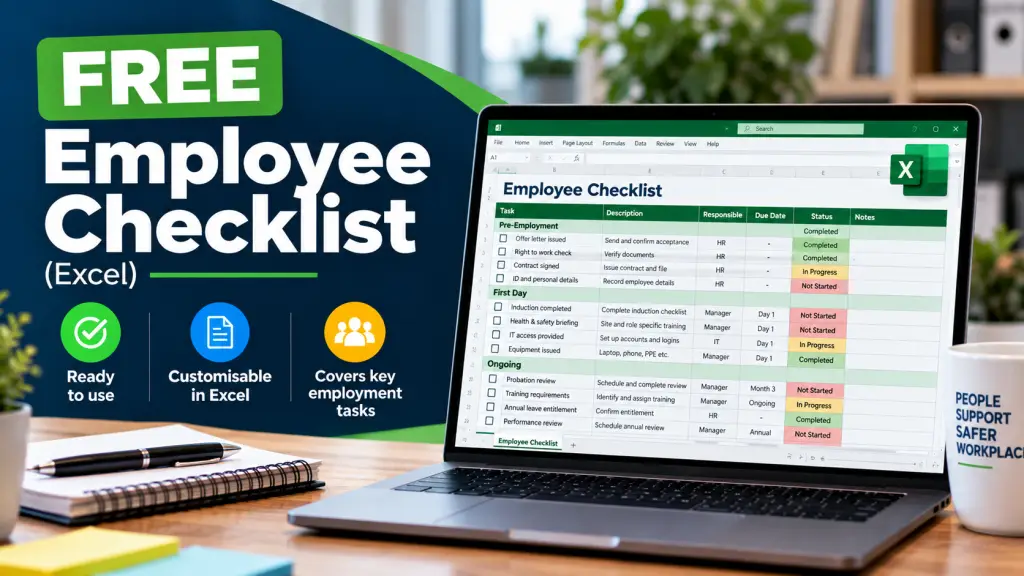


Here is an uncomfortable truth from inside one of the world’s most sophisticated compliance cultures: in many FCA-authorised firms, the training record is the weakest point in the framework. Risk models are stress-tested, governance is layered, three lines of defence stand ready — and evidence that every employee completed their AML refresher lives in a spreadsheet, with CPD hours self-reported on honour and certificates scattered across email folders. When the FCA asks the question it always asks — can you demonstrate, for every relevant individual, what training was completed, when, and to what standard? — those approaches collapse under scrutiny.
The sector carrying this obligation is Britain’s economic engine. Financial services directly employs 1.17 million people (2.5 million across the broader industry), contributes £281 billion in GVA — around £12 in every £100 of UK output — and generates a £114 billion trade surplus, the largest of any UK sector, with two-thirds of its jobs outside London (ONS, Q1 2024; TheCityUK, 2025). This guide sets out why training in financial services and insurance is uniquely demanding and what FCA supervision-ready looks like in practice. The data throughout draws on our State of Financial Services & Insurance Training Report 2026, worth reading in full if you own compliance, T&C or L&D in an authorised firm.
Training as a condition of authorisation
What makes this sector different is that its training obligations are not aspirational standards — they are conditions of authorisation, defined and enforced by the FCA and PRA, reaching every function from the board to the contact centre. Consumer Duty, fully in force since July 2024, expects firms to evidence that staff understand the four outcomes they must deliver for customers, with training records examined at supervision visits. The Training and Competence sourcebook sets specific CPD obligations for retail investment advisers, mortgage advisers and insurance intermediaries. And failure to evidence any of it triggers supervisory engagement, enforcement action and — uniquely in this sector — personal, individual accountability.
Why financial services L&D is harder than almost anywhere else
Three forces combine to make this the most regulated learning environment in the economy.
- Regulatory obligation across every role. Annual AML/CTF training for all staff under the Money Laundering Regulations 2017 and SYSC rules, Consumer Duty awareness for everyone client-facing or product-involved, financial crime and market abuse, UK GDPR, cyber security, conflicts of interest, vulnerable customers and operational resilience — each defined, monitored and enforced.
- Individual accountability under SM&CR. Senior Managers carry personal regulatory responsibility, every Certified Function holder must be certified fit and proper annually with training evidence forming part of the assessment, and virtually all employees are subject to the Conduct Rules with an annual training expectation.
- Regulation that moves at publishing speed. Consumer Duty guidance, Dear CEO letters, Basel 3.1, the Edinburgh Reforms, evolving AI and operational-resilience frameworks — each publication creates a training requirement that must be built, deployed and evidenced within weeks, not quarters. Individually each would stretch any L&D function; together they demand training governance that is role-specific, continuously evidenced, and as fast as the regulator’s printing press.
The compliance foundation every authorised firm carries
Before any role-specific development, a firm-wide regulatory baseline must be delivered, refreshed and evidenced. Across an authorised firm it spans:
- Financial crime — annual AML/CTF for all staff with enhanced training for MLRO and higher-risk roles, sanctions compliance, fraud awareness, anti-bribery under the Bribery Act 2010, and market abuse (MAR) awareness.
- Customer outcomes — Consumer Duty awareness covering the four outcomes (products and services, price and value, consumer understanding, consumer support), vulnerable customers training aligned to FG21/1, and the conduct expectations embedded in legacy TCF schemes.
- Data, cyber and resilience — UK GDPR for anyone handling customer or employee data (ICO enforcement in financial services is active), cyber security awareness for all with enhanced training for IT and third-party management, and operational resilience training for important business services under PS21/3.
- Governance and culture — conflicts of interest under SYSC 10, whistleblowing, and diversity, equity and inclusion, increasingly prominent in FCA expectations alongside Equality Act 2010 obligations. Every category carries an annual or defined refresh cycle — and every lapse is a gap in the evidence trail the regulator will eventually request.
SM&CR: three populations, three training regimes
The Senior Managers and Certification Regime is the sector’s defining accountability structure, and it quietly demands three distinct training programmes running in parallel. Senior Management Function holders need training on their prescribed responsibilities, the Duty of Responsibility, governance obligations and the consequences of personal regulatory breach. Certified Function holders must be assessed fit and proper every year — and training evidence forms part of that assessment, meaning role-specific regulatory knowledge, conduct refreshers and CPD must be documented against each individual’s certification cycle. Conduct Rules staff — essentially everyone else — carry an annual Conduct Rules training expectation, with evidenced completion a standard request at supervisory visits. Managerial attestation without underlying training data is not sufficient for fitness and propriety purposes; the certification signature is only as strong as the evidence beneath it.
The regulatory update problem: weeks, not quarters
Here is the operational pressure that breaks traditional L&D models in this sector. When the FCA publishes a Policy Statement, a Dear CEO letter or new Consumer Duty guidance, the firms it supervises are expected to absorb it — and evidence that relevant staff understood it — within a timeframe measured in weeks. Traditional course development, with its instructional-design cycles and external agencies, simply cannot keep that pace. The firms handling it best upload the publication itself to an AI course builder and generate a structured, assessed module for the affected population within hours, aligned to their specific permissions and risk appetite. Training at the speed of regulation is no longer a slogan; it’s the operating requirement.
Multi-entity groups, appointed representatives and the perimeter problem
Most substantial firms are not one firm. A mid-sized group might span a bank, an insurer, a wealth manager and a mortgage broker — each with different FCA permissions, different T&C schemes and different obligations — plus a hybrid workforce and a network of appointed representatives whose training compliance the principal firm must oversee. When each entity tracks training separately, group-level assurance evaporates. The structure that works: multi-entity management on a single platform with entity-level regulatory reporting and a consolidated group view, role-based pathways assigned automatically on enrolment (an investment adviser’s programme differing materially from a mortgage adviser’s, as T&C schemes require), and appointed representatives managed through their own portal with principal-firm visibility.
How a modern, AI-native approach solves it
This is the gap purpose-built Learning & Development for Financial Services & Insurance is designed to close. Rather than spreadsheets and scattered certificates, a modern AI-powered learning platform brings regulatory training, SM&CR management, CPD and supervision evidence into one place:
- 200+ RoSPA and CPD-accredited courses in our Learning Library — AML/CTF, Data Protection, Cyber Security Awareness, Financial Crime, Bribery Act, Conflicts of Interest, Diversity & Inclusion and more — with the firm’s whole compliance training estate managed in one system.
- Automated annual renewal workflows — AML, Consumer Duty refreshers and Conduct Rules training re-assign themselves before certification lapses, with no manual administration and no gaps in the evidence trail.
- SM&CR population management — Senior Managers, Certified Functions and Conduct Rules staff each assigned automatically to the pathway matching their obligations, tracked against each individual’s annual certification cycle with exportable evidence for fitness and propriety sign-off.
- An AI course builder that turns an FCA Policy Statement, a Dear CEO letter or an updated AML risk assessment into a structured, assessed module in minutes — up to 10× faster than traditional development — so regulatory-update training deploys within days of publication.
- CPD tracking aligned to T&C schemes — hours accumulated automatically across learning activity, with summaries generated against professional-body and T&C requirements, replacing self-reported spreadsheets that don’t survive an FCA T&C audit.
- FCA supervision-ready reporting — a complete, timestamped evidence report for any entity, population or regulatory topic in under 60 seconds, a real-time Conduct Rules dashboard, board-level compliance visibility, and 100+ language delivery for international teams. The result is a firm where the training record matches the sophistication of the rest of the compliance framework — supervision-ready every day, certified on evidence rather than attestation, and moving at the speed the regulator publishes.
What “good” looks like — a quick checklist
If you’re assessing your own firm, answer these as a supervisor would:
- If the FCA requested evidence of AML training completion for every employee today, how long would it take — and would you trust its accuracy?
- Do AML, Consumer Duty and Conduct Rules training re-enrol automatically, every year, without manual chasing?
- Is every Certified Function holder’s training evidence exportable ahead of annual fitness and propriety sign-off?
- Are role-based pathways in place — or is a mortgage adviser receiving the same generic training as an operations analyst?
- When the FCA publishes new guidance, can you build and deploy training to the affected population within days?
- Does your board see training compliance rates alongside other key risk indicators? If several answers are “no,” the exposure sits exactly where enforcement investigations look first — in the gap between what the firm asserts and what its records evidence.
See it built for your firm
The fastest way to grasp the difference is to see your own scenarios — an FCA evidence request, an annual certification cycle, a Dear CEO letter turned into training — running on a platform built for regulated firms. Book a demo and we’ll walk through it, or start a free trial and have real training live within days. For the full picture of the sector’s challenges and data, read the State of Financial Services & Insurance Training Report 2026.
Frequently asked questions
What compliance training must FCA-authorised firms deliver? A firm-wide baseline including annual AML/CTF (Money Laundering Regulations 2017 and SYSC), Consumer Duty awareness for client-facing and product-involved staff, financial crime and market abuse awareness, anti-bribery, UK GDPR, cyber security, conflicts of interest (SYSC 10), vulnerable customers (FG21/1) and, for relevant roles, operational resilience — all refreshed on defined cycles and evidenced for supervision.
What training does SM&CR require? Three parallel regimes: Senior Management Function holders trained on prescribed responsibilities and the Duty of Responsibility; Certified Function holders assessed fit and proper annually, with role-specific training and CPD evidence forming part of the assessment; and annual Conduct Rules training for virtually all other employees, with evidenced completion a standard FCA supervisory request.
What are the CPD requirements under the FCA’s T&C sourcebook? The Training and Competence sourcebook sets specific CPD obligations for regulated roles including retail investment advisers, mortgage advisers and general insurance intermediaries — requiring structured, evidenced, role-relevant development. Self-reported spreadsheets are increasingly indefensible at a T&C audit; hours should be accumulated and evidenced automatically.
How quickly should firms turn FCA publications into training? Within days to weeks. Policy Statements, Dear CEO letters and new guidance create training obligations for affected populations, and an AI course builder can convert the publication itself into a structured, assessed module in minutes — aligned to the firm’s permissions — rather than waiting on a traditional development cycle.
How should groups manage training across multiple entities and appointed representatives? On a single platform with multi-entity structure support — entity-level reporting for each set of permissions, a consolidated group view, role-based pathways assigned automatically, and appointed representatives managed via their own portal with principal-firm visibility of their compliance status.
How fast can supervision-ready evidence be produced? With all training on one platform, a complete, timestamped report for any entity, population or regulatory topic — assignments, completions, scores and renewal dates — can be generated in under 60 seconds, turning an FCA request or internal audit from a scramble into a routine export.