
LMS vs LXP: What’s the Real Difference?
If you’re exploring modern learning technology, you’ve likely come across two key terms: Learning Management System (LMS) and Learning Experience Platform (LXP).
They’re often used interchangeably, but they serve very different purposes — and choosing the wrong one can limit engagement, slow adoption, and reduce ROI.
This guide breaks down the differences in a clear, practical way so you can make the right decision for your organisation.
What is an LMS?
A Learning Management System (LMS) is a structured platform designed to deliver, manage, and track training.
Think of it as the backbone of compliance and formal learning.
Key Characteristics of an LMS
- Centralised training delivery
- Structured courses and learning paths
- Mandatory/compliance training management
- Progress tracking and reporting
- Certifications and audit trails
- Admin-led control over content
What an LMS is Best For
An LMS is ideal when you need:
- Health & safety training
- Compliance and regulatory courses
- Employee onboarding
- Standardised learning across teams
- Reporting for audits and legal requirements
In industries like construction, manufacturing, healthcare, and logistics, an LMS is often non-negotiable.
What is an LXP?
A Learning Experience Platform (LXP) is a more modern, user-driven system focused on engagement, discovery, and continuous learning.
Instead of pushing training, it pulls learners in.
Key Characteristics of an LXP
- Personalised learning recommendations
- AI-driven content suggestions
- User-generated content
- Social learning (comments, sharing, collaboration)
- Integration with external content (YouTube, articles, courses)
- Netflix-style learning experience
What an LXP is Best For
An LXP is ideal when you want to:
- Encourage self-directed learning
- Upskill employees continuously
- Improve engagement and retention
- Support leadership and soft skills development
- Create a culture of learning
It’s less about compliance — and more about growth.
The Core Difference (In Plain English)
At a high level:
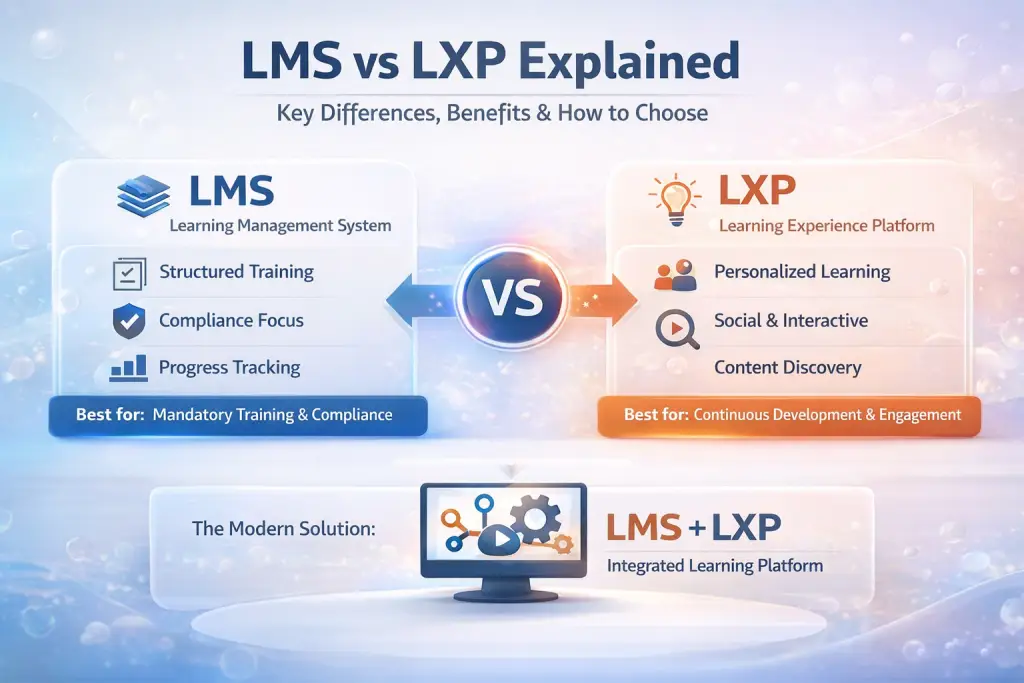
- LMS = Control, structure, compliance
- LXP = Freedom, engagement, personalisation
Or even simpler:
- LMS tells people what they must learn
- LXP helps people discover what they want to learn
LMS vs LXP: Side-by-Side Comparison
| Feature | LMS | LXP |
|---|---|---|
| Primary Focus | Compliance & training delivery | Engagement & learning experience |
| Learning Style | Structured, top-down | Self-directed, bottom-up |
| Content Control | Admin-led | User + AI-driven |
| Personalisation | Limited | Advanced (AI recommendations) |
| Social Features | Minimal | Strong (sharing, commenting) |
| Reporting | Detailed & compliance-focused | Less formal, more behavioural insights |
| Use Case | Mandatory training | Continuous development |
Why LMS Platforms Can Fall Short
Traditional LMS platforms are powerful — but they have limitations:
- Often feel rigid and outdated
- Low engagement once mandatory training is complete
- Little personalisation
- “Tick-box” learning culture
Employees log in because they have to — not because they want to.
Why LXPs Are Gaining Popularity
LXPs solve many of these issues by making learning:
- More relevant (AI recommendations)
- More accessible (on-demand content)
- More engaging (modern UX, social features)
They align with how people already consume content — like Netflix or Spotify.
The Problem: You Probably Need Both
Here’s where many businesses get stuck.
An LXP sounds better — but it can’t replace an LMS in most organisations.
Why?
Because:
- You still need compliance tracking
- You still need audit-ready reporting
- You still need structured onboarding
At the same time:
- Your LMS alone won’t drive engagement
- It won’t build a learning culture
- It won’t support modern upskilling needs
The Modern Solution: LMS + LXP Combined
The most effective approach today is a hybrid model.
A platform that combines:
- LMS structure (compliance, tracking, reporting)
- LXP experience (AI, personalisation, engagement)
This gives you the best of both worlds.
What This Looks Like in Practice
- Mandatory training is assigned and tracked (LMS)
- Employees receive personalised recommendations (LXP)
- Users can explore additional content freely
- AI suggests learning based on role, behaviour, and goals
- Admins retain full oversight and compliance control
How to Choose the Right Platform
When deciding between LMS, LXP, or a hybrid, ask:
1. Is compliance critical?
If yes → You must have LMS functionality.
2. Is engagement currently low?
If yes → You likely need LXP features.
3. Do you want to future-proof your learning strategy?
If yes → A combined LMS/LXP platform is the best long-term option.
4. Are you scaling or modernising?
If yes → Look for AI-driven personalisation and automation.
Key Features to Look For
Regardless of your choice, the best modern platforms should include:
- AI-powered course creation
- Smart recommendations
- Clean, intuitive UX
- Strong reporting and analytics
- Mobile-first experience
- Integration with existing systems
- Automation for admin tasks
Common Mistakes to Avoid
Many organisations make these mistakes:
- Choosing an LMS that’s too basic or outdated
- Ignoring user experience
- Focusing only on compliance
- Overlooking AI capabilities
- Treating learning as a one-off event instead of continuous
Final Thoughts
The debate between LMS and LXP isn’t about which is better — it’s about what problem you’re trying to solve.
If you need control, compliance, and structure — an LMS is essential.
If you want engagement, growth, and modern learning — an LXP is critical.
But in reality, the most successful organisations are moving toward intelligent platforms that combine both.
That’s where learning is heading — and where the biggest gains in performance, engagement, and ROI will come from.