
The Golden Quarter’s First Deadline Is Training: Retail Workforce Learning for Peak 2026

This week’s trade press reads like a mobilisation notice. Tesco is recruiting more than 28,000 temporary workers for the festive period. Sainsbury’s and Argos have opened 17,500 seasonal roles, M&S 11,000, the John Lewis Partnership over 10,400, Boots around 6,000, Royal Mail more than 20,000. Across stores, warehouses, distribution centres and delivery operations, UK retail […]
How Often Does Workplace Training Need Renewing? UK Guide.
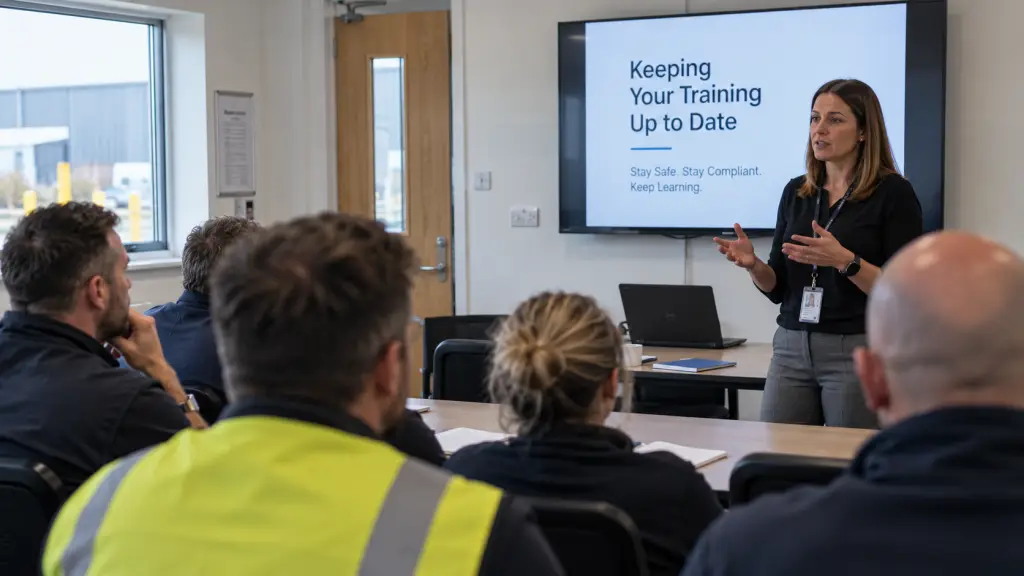
UK Refresher Periods for Every Major Course. Ask ten compliance managers how often manual handling training needs renewing and you will get several confident, different answers. The confusion has a simple cause: UK workplace training runs on two clocks at once. A small number of courses carry genuine fixed validity, set in law or by […]
Benedict’s Law Training: What Schools Must Do by September 2026

From September 2026, allergy safety in England’s schools stops being good practice and becomes a legal expectation. Under Benedict’s Law, every school will be required to have and publish an allergy policy, hold spare adrenaline auto-injectors (AAIs) on site, and ensure all staff receive allergy awareness training — with statutory guidance that inspections and accountability […]
The Smarter Induction: How Video Makes Employee, Contractor and Visitor Onboarding Easy and Compliant

Every organisation runs the same scene on a loop. A new starter arrives and someone walks them through the policies, the fire exits and the do’s and don’ts. A contractor turns up to begin work and has to be briefed on site risks and permits before they lift a finger. A visitor signs in and […]
Recycling & Waste Management Training – Safety, Permits and Regulatory Reform

Few workforces in Britain answer to as much, or risk as much, as this one. Recycling and waste management is simultaneously one of the country’s most hazardous occupations and one of its most heavily regulated — accountable to the HSE for safety, the Environment Agency for permits, and now a wave of new legislation reshaping […]
Health & Safety Training in UK Aerospace: The 2026 Employer’s Guide

In most industries, a training gap shows up as a missed deadline or a quality dip. In aerospace, it can show up at 35,000 feet. That single fact reframes everything about how the sector approaches workforce learning — and why “we ran an induction” is nowhere near the bar. The UK aerospace industry is no […]
Animated Health & Safety Videos: 9 Reasons They Outperform the Old Toolbox Talk

Every year in Great Britain, work-related injury and ill health quietly drain something close to £22.9 billion from the economy and account for 40.1 million lost working days, according to the Health and Safety Executive’s 2024/25 figures. Behind those numbers sit roughly 680,000 workers who picked up a non-fatal injury on the job — many of them doing […]
Employee, Visitor & Contractor Induction Videos – Complete Guide

Every organisation has people arriving on-site who need information. Some are new employees starting their first day. Others are contractors carrying out specialist work. Some may simply be visitors attending a meeting, collecting goods, or touring a facility. Regardless of who they are, every person entering your workplace needs to understand how to stay safe, […]
Contractor Induction Videos: Why More Businesses Are Replacing Paper-Based Site Inductions
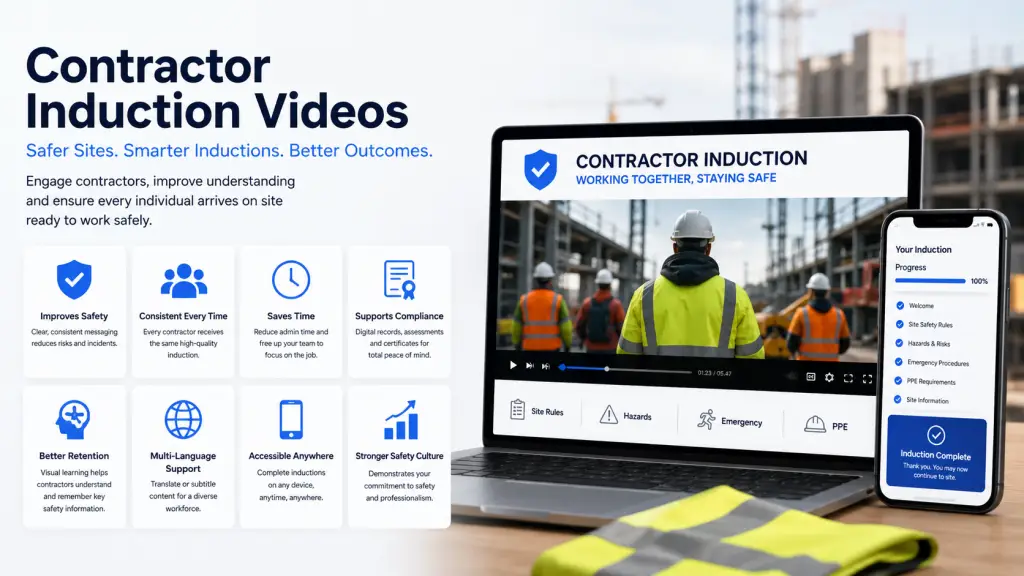
Every year, thousands of contractors arrive at workplaces, construction sites, manufacturing facilities, warehouses, offices, and infrastructure projects across the UK. Before they can begin work, they need to understand the site’s rules, hazards, emergency procedures, and safety expectations. Traditionally, this process has been handled through face-to-face briefings, PowerPoint presentations, paper handouts, or lengthy induction meetings. […]
AI LMS Platforms Explained: The Future of Workplace Learning and Training
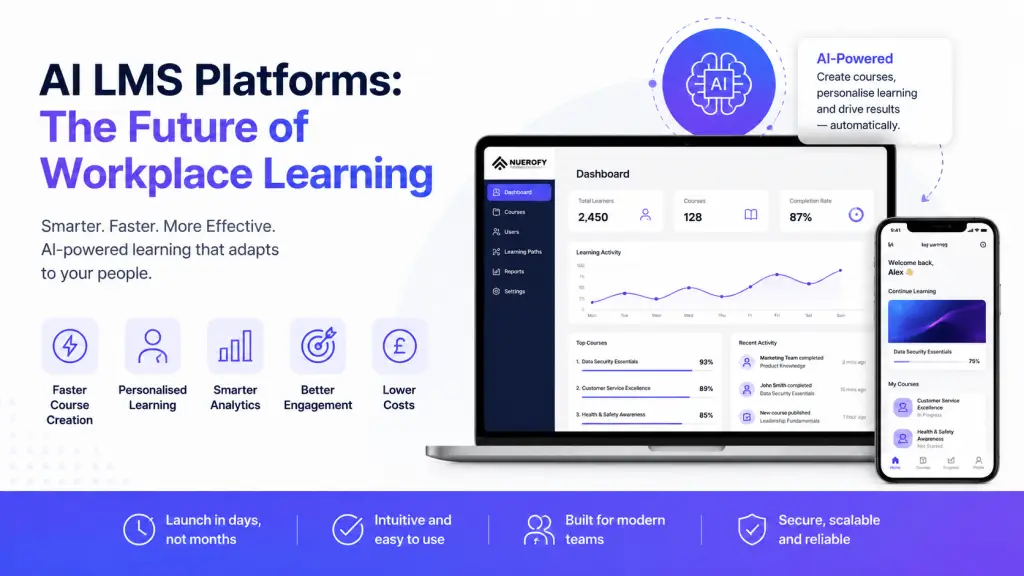
The learning management system market is changing faster than ever before. For years, businesses relied on traditional LMS platforms that focused heavily on compliance, course delivery, and reporting. While these systems solved basic training requirements, they often created new problems in the process. Many became slow to manage, difficult to scale, and frustrating for learners […]