
Every year in Great Britain, work-related injury and ill health quietly drain something close to £22.9 billion from the economy and account for 40.1 million lost working days, according to the Health and Safety Executive’s 2024/25 figures. Behind those numbers sit roughly 680,000 workers who picked up a non-fatal injury on the job — many of them doing tasks they’d been “trained” on through a dog-eared handbook or a slideshow nobody can remember.
That gap between training delivered and training that actually sticks is exactly where animated health and safety videos earn their keep. They turn the dull, the abstract and the dangerous-to-demonstrate into something a person watches once and genuinely retains. This guide breaks down what they are, why animation specifically works, and the nine benefits that are pushing UK employers to retire the static PDF for good.
What Are Animated Health & Safety Videos?
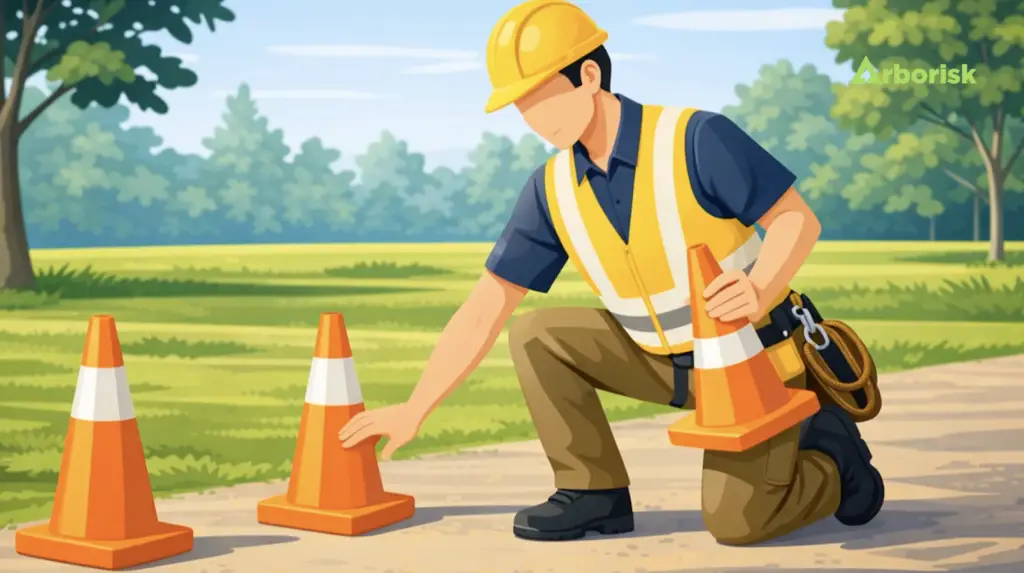
An animated health and safety video uses motion graphics, illustrated characters or 3D scenes to explain a safety concept — instead of filming real people in a real environment. Think of a forklift’s blind spots shown as a glowing danger zone, a chemical reaction visualised in cross-section, or a fire evacuation route animated step by step.
They cover the full spread of workplace safety topics: inductions, manual handling, fire safety, working at height, COSHH and hazardous substances, lone working, slips and trips, machinery guarding, electrical safety, and incident reporting. The format suits anything where you need to show what could go wrong without exposing a real person to the hazard to do it.
Crucially, animation isn’t just “a cartoon version of a safety film.” It’s a different teaching tool — and that difference is where the advantages start.
Why Animation Specifically? (Not Just Any Video)
Live-action safety training video footage has its place, but it carries baggage: location hire, actors, reshoots when a process changes, and footage that dates the moment your PPE policy or site layout updates. Animation sidesteps most of that.
There’s a learning-science case too. A 2023 review of video-based learning research found that animations produced higher learning outcomes than both text-based media and traditional classroom delivery. Visuals are processed faster than text, and animation lets you do something film can’t: strip away every distraction and spotlight only the thing that matters — the pinch point, the wrong lifting posture, the second the floor becomes wet.
With that foundation laid, here’s where the real value shows up.
The 9 Benefits of Animated Health & Safety Videos
1. They make invisible and dangerous hazards visible — safely
Some of the most serious workplace risks are the ones you can’t easily see or can’t ethically recreate. You can’t ask an employee to actually fall from height, breathe in a hazardous vapour, or get caught in a machine to demonstrate the consequences. Animation can show all of it — the trajectory of a fall, the spread of fumes, the force of a 25kg load on a poorly aligned spine — without a single real person at risk. For high-consequence sectors like construction, manufacturing and logistics, this alone justifies the format.
2. People actually remember what they watched
Forgetting is the enemy of safety training. Information delivered in a one-off session decays fast — research consistently shows a steep drop-off within days. Animated, visual content fights that decay. Learners tend to recall visual and audiovisual material far better than text they skim-read, and a tight 3–5 minute animation built around a single clear message lands harder than 20 pages of policy. When the moment of risk arrives on the floor, it’s the visual memory that fires first.
3. Engagement that a printed policy can’t buy
Be honest: nobody shares the staff handbook. Animated videos, on the other hand, are inherently watchable and inherently shareable — a genuinely good safety animation gets passed around, quoted on the floor, and remembered for the right reasons. That engagement isn’t a vanity metric. An employee who wants to watch is an employee who’s paying attention, and attention is the first ingredient of retention.
4. Total consistency across every site, shift and new starter
A trainer delivering the same induction 40 times will deliver it 40 slightly different ways. Tired Friday-afternoon delivery isn’t the same as fresh Monday-morning delivery. An animated video delivers the exact same message, every time, to everyone — the night shift, the seasonal hires, the team three sites over. For multi-site and distributed UK workforces, that consistency is the difference between a policy that exists on paper and one that’s genuinely embedded everywhere.
5. Accessibility and multilingual reach built in
The UK workforce is multilingual and neurodiverse. Animation travels across language barriers far better than dense text — visual storytelling carries a lot of meaning before a word is spoken — and it’s straightforward to add subtitles, voiceovers in multiple languages, and audio for those who struggle with written English. A well-made animation can teach a fire procedure to someone whose first language isn’t English almost as effectively as to a native speaker, which matters enormously in hospitality, warehousing, food manufacturing and facilities sectors.
6. Cheap to update, easy to scale
This is the quiet superpower. When a regulation changes, a site is reconfigured, or a near-miss reveals a gap, a live-action film means a reshoot. An animation usually means editing a scene. The marginal cost of training the next 500 employees is effectively zero — you’re not booking trainers or rooms. For a growing business, that scalability turns safety training from a recurring operational cost into a one-time asset that keeps paying back.
7. They generate the audit trail regulators want to see
When the HSE comes knocking, “we told them about it” isn’t a defence — “here’s the record” is. Delivered through a learning platform, animated videos automatically log who watched what, when, whether they passed the follow-up check, and when they’re due a refresh. That completion data is the evidence base for demonstrating due diligence, and it transforms safety training from a compliance chore into a defensible, exportable record.
8. Mobile-first delivery meets a mobile-first workforce
Frontline staff rarely sit at a desk. A 3-minute animation works on a phone in a break room, on a tablet at the warehouse induction point, or on a screen in the depot. The format fits the way deskless workers actually consume information — in short bursts, on the device already in their pocket — rather than forcing them into a classroom they’ll resent.
9. They’re the natural home for AI-powered course creation
The traditional knock against bespoke animation was cost and turnaround. That’s collapsing. AI-assisted course builders can now turn a written policy or risk assessment into a structured, visual learning module dramatically faster than conventional authoring — which means safety content can finally keep pace with the operations it’s meant to protect.*
What Makes an Animated Safety Video Actually Work?
Not all animation is good animation. The ones that change behaviour tend to share a few traits:
— One message per video. Don’t cram fire, COSHH and manual handling into one film. Short and single-focused beats long and comprehensive. — Real scenarios, not generic stock. A warehouse animation should look like your warehouse. Relevance drives recall. — A clear “so what.” Show the consequence, not just the rule. People remember why, not just what. — A knowledge check at the end. A couple of embedded questions turn passive watching into active learning — and produce the completion data you need. — A refresh cadence. Safety knowledge fades. Build in scheduled re-watches rather than one-and-done inductions.
Common Use Cases by Sector
The format flexes across almost every UK industry: construction (working at height, CDM responsibilities, site inductions), manufacturing and food production (machinery guarding, HACCP, allergen handling), warehousing and logistics (forklift safety, manual handling, racking), healthcare and social care (infection control, moving and handling, lone working), hospitality (kitchen safety, fire evacuation, slips and trips), and facilities management (COSHH, electrical safety, working alone). Wherever there’s a hazard and a workforce that turns over, animation fits.
The Bottom Line
Animated health and safety videos aren’t a gimmick — they’re a direct response to a measurable problem. With UK workplace injury and ill health still costing tens of billions and tens of millions of working days a year, the case for training that people actually watch, remember and act on is overwhelming. Animation delivers consistency, accessibility, retention and an audit trail in a single, scalable package, and AI is making it faster and cheaper to produce than ever.
The old toolbox talk had a good run. But if the goal is fewer incidents, a more confident workforce and a compliance record that holds up under scrutiny, the moving picture wins.
Frequently Asked Questions
Are animated health and safety videos legally compliant in the UK? The format itself doesn’t determine compliance — the content does. Animated training can fully satisfy HSE expectations provided it’s accurate, role-relevant, delivered to the right people and properly recorded. Delivering it through a learning platform that logs completions strengthens your due-diligence position.
How long should a safety animation be? Aim for 2–5 minutes per topic. Short, single-focus videos retain attention and recall far better than one long film covering everything.
Are animated videos more effective than live-action safety footage? For most workplace topics, yes — especially where the hazard is dangerous or impossible to film, where processes change often, or where a multilingual audience is involved. Live-action still works well for showing real equipment or specific physical techniques.
Can we update an animated video when our policy changes? That’s one of the biggest advantages. Animations are typically far quicker and cheaper to edit than reshooting live footage, so your training can stay current as regulations and sites evolve.
Nuerofy is an AI-powered Learning Management and Experience Platform (LMS/LXP) built for UK businesses. Our AI course builder turns your policies and risk assessments into engaging, audit-ready safety training — and tracks every completion automatically.
Want to see it in action? Visit nuerofy.com, email Sales@nuerofy.com, or call +44 (0)1527 280 007.
*Platform capability — see nuerofy.com/ai-studio for details. Statistics sourced from the Health and Safety Executive (HSE) 2024/25 annual figures and published video-based learning research.